Workflow 01
- Storm lead
- inspection booking
- photo capture
- estimate approval
- insurance coordination
- install schedule
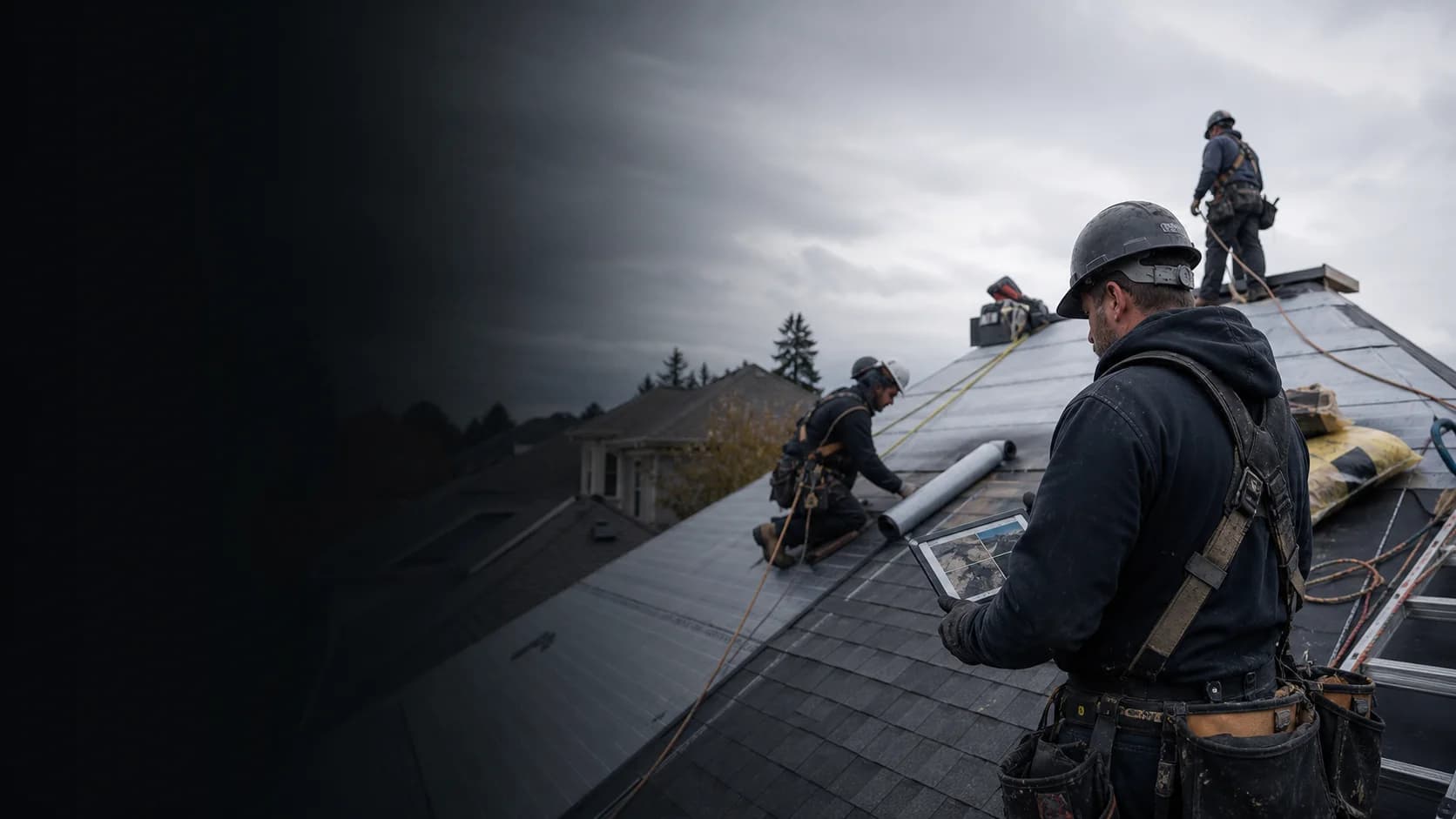
Storm volume, inspection evidence, insurer correspondence, material availability, and weather windows determine roofing throughput. Those dependencies need to remain attached to each property and job.
A job becomes schedulable when evidence, approvals, materials, and weather all support the date.
Discuss an operationIntake, field work, approvals, scheduling, documentation, and billing lose context when separate tools control each step. These issues define the first areas to inspect with a roofing team.
Storm lead volume overwhelms intake workflows
Inspection photos are spread across phones and chat threads
Insurance correspondence sits outside the job timeline
Material orders and crew scheduling are hard to coordinate
A shared job record can connect intake, planning, execution, approvals, billing, and closeout while preserving the history of every decision.
Workflow 01
Workflow 02
Workflow 03
Emergency mitigation, inspection requests, repairs, and replacement opportunities enter distinct queues with their own priorities and owners.
Measure storm lead response speed, insurance approval cycle time, material-delay risk, and closeout completion rate.
Audit logs preserve all estimate revisions, insurance-step updates, and schedule changes for accountability.